

- Power rack vs. half rack vs. squat stand: which suits a beginner in home strength training?
- Safety features every beginner must check before buying
- How much floor space does a squat rack actually need?
- What your budget gets you: squat rack price tiers in Australia
- Top-rated squat racks for home strength training beginners: four options worth shortlisting
- What to confirm before you place the order
- Start with the right frame and build from there
Top-Rated Squat Racks for Home Strength Training Beginners
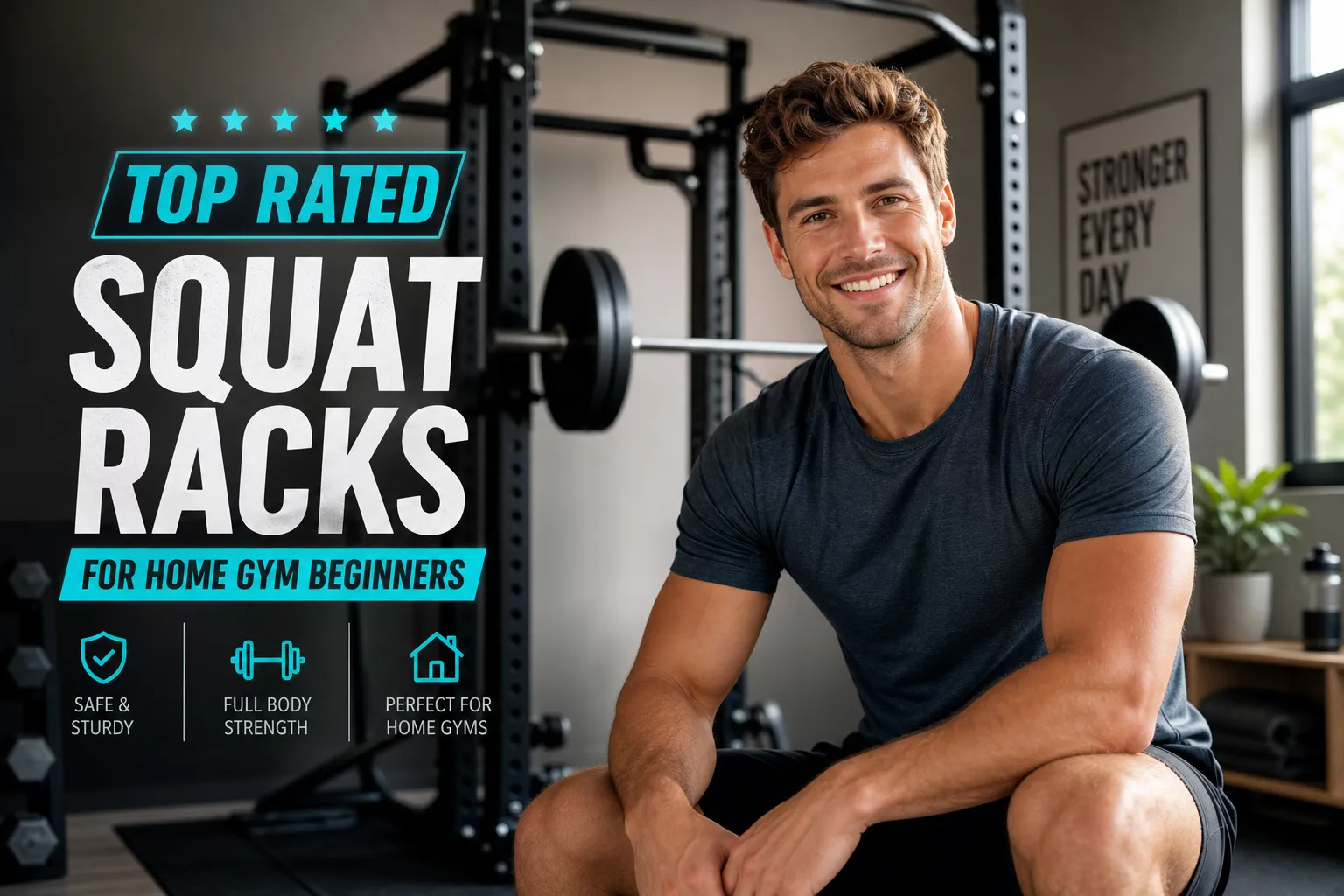
Many beginners don't get stuck on motivation. They get stuck staring at eight similar-looking steel frames with no idea what separates a $350 model from a $1,400 one. The weight capacities all sound enormous, the specs blur together, and many online reviews cover models that aren't even stocked locally, which can mislead first-time Australian buyers.
This guide to the top-rated squat racks for home strength training beginners cuts through that confusion. By the end, you'll have a clear framework for choosing the right rack type for your space, the safety features worth prioritising, and which models are genuinely worth your money as an Australian buyer. If you've already browsed Rug and Rig Fitness and found yourself overwhelmed by the range, that's a normal starting point, and exactly the kind of decision this guide is built to simplify.
We'll cover rack types, safety specs, floor space requirements, price brackets, and four models worth shortlisting. Each section mirrors a real purchase decision, so you can follow the sequence or jump straight to what you need.
Power rack vs. half rack vs. squat stand: which suits a beginner in home strength training?
This is the first decision to make, and it shapes everything else. Each rack type has a different safety profile, footprint, and price point, so the right choice depends on your training goals and the size of your available space.
Full power rack: the safest enclosed option
A full power rack uses four upright posts to create an enclosed cage, with safety bars running across both sides at adjustable heights. This is the safest configuration for beginners training alone with heavy loads because the safety bars catch the barbell if you miss a lift. The trade-off is footprint: plan for at least a 10×10-foot floor area, ideally not shared with living or bedroom traffic during workouts, to allow proper clearance for plate loading and movement.
Half rack for home gym: the middle ground
A half rack uses two uprights at the front with an open back, which reduces the footprint significantly while still including spotter arms and a pull-up bar on most models. It's a strong choice for home gyms with limited square footage where you want more than a basic stand but can't commit to a full cage. The open back does mean slightly less protection during a failed lift, though with properly set spotter arms the risk is manageable for most beginner training loads.
Squat stands: compact but not ideal for solo beginners
Squat stands are two independent uprights with the smallest footprint and lowest price of the three options. The problem for beginners is safety: there's no enclosed zone, and the shorter spotter arms offer far less protection if you miss a lift. Stands are better suited to intermediate lifters who already know how to safely ditch the bar without injury. If you're just starting out and training without a spotter, a full rack or half rack is a better investment.
Safety features every beginner must check before buying
A rack's rated weight capacity alone doesn't tell you whether it's safe to train in. Structural quality and safety hardware matter equally, especially when you're still learning and technique errors are more likely. For a practical, Australia-focused walkthrough on safe use and setup, see the Power Rack & Squat Rack Guide: How to Use Your Rack Safely in Australia.
Steel gauge and tubing size: what the specs actually mean
Gauge numbers work backwards: lower gauge means thicker steel. 11-gauge steel sits at approximately 3mm thick, while 14-gauge steel is closer to 1.9mm. Most top-rated beginner racks use 3×3 inch, 11-gauge uprights, which resist flexing under heavy loads and hold up to years of consistent training. Cheaper racks, particularly those sold through generic online marketplaces, often use 2×2 inch, 14-gauge tubing. That tubing flexes noticeably under heavier loads and wears out faster at the joint connections. For beginners who plan to progress beyond light lifting within a year, 11-gauge steel is worth the extra investment from day one.
Spotter arms, safety pins, and J-cups: the hardware that saves you
Spotter arms (also called safety bars) are what catch the barbell if you miss a lift. They're essential for solo training, no exceptions. When evaluating a rack, check that the spotter arms are rated for your target weight and that they sit at adjustable heights across enough positions to cover your squat depth. J-cups hold the bar at your starting height; look for UHMPE-lined or rubber-lined options that help protect your barbell's knurling over time. Pin-and-pipe safety systems are commonly used on quality beginner racks because they offer a high degree of adjustability across different lift heights.
Weight capacity and bolting options
A capacity of 1,000 to 1,100 lbs is the benchmark for top-rated beginner racks and provides far more headroom than most home gym users will ever need. More important than the capacity number is whether the rack can be bolted to your floor. Unbolted racks can shift or tip during heavy use, which creates real risk regardless of the steel gauge. Always confirm whether the model you're considering can be bolted to a concrete or wooden floor, or whether anti-tip feet are included for situations where bolting isn't possible.
How much floor space does a squat rack actually need?
Buying a rack that doesn't fit your ceiling or floor plan is one of the most common and most avoidable mistakes beginners make. Measure twice, order once.
Minimum footprint by rack type
A full power rack needs at least a 10×10-foot floor area, with two to three feet of clearance on each side of the bar for plate loading and movement. A half rack has a base footprint of roughly 4×4 feet, but it still requires working clearance around it, so budget for a similar total floor area. Foldable or wall-mounted racks are the exception: they reduce the active footprint to as little as 4×4 feet when folded, making them the most practical compact squat rack option for apartments or small rooms that need to serve multiple purposes. For a helpful layout-focused guide, see how much space I need for a power rack.
Ceiling height requirements
Standard racks run between 80 and 92 inches tall, and a 9-foot ceiling is the recommended minimum for comfortable overhead pressing and pull-ups inside the rack. For spaces with ceilings under 8.5 feet, purpose-built low-ceiling models like the Body-Solid GPR400 (which stands at 79 inches) are a practical solution. Ceiling height also determines where the pull-up bar sits, so confirm the bar position clears your ceiling with enough room to actually use it before you place your order. For a dedicated minimum-ceiling reference, see this guide on the minimum ceiling height required for a squat rack. If you're focused on compact solutions, consider the compact power rack approach for tight rooms.
What your budget gets you: squat rack price tiers in Australia
Australian buyers have three clear price brackets for beginner racks, each with meaningful differences in build quality and long-term value. Knowing what each tier actually delivers helps you buy smart the first time rather than upgrading within two years.
Budget tier: $250, $500 AUD
Entry-level models in this bracket typically use 2×2-inch tubing, basic J-cups, and limited accessory compatibility. They're serviceable for light use and for lifters who expect to upgrade fairly quickly. One genuine advantage of buying locally in this bracket is that delivery is typically included in the price, which avoids the $200 to $600 in extra costs that can come with importing comparable gear from overseas brands.
Entry-mid tier: $600, $1,100 AUD
Models like the VULCAN Home Gym Power Cage (around $899) and the VERVE Satori Power Rack (around $899) sit in this range. You get 3×3-inch steel, better spotter arm options, multi-grip pull-up bars, and more accessory mount points. This is the tier that offers the best balance of durability and value for beginners who plan to train consistently for several years. It's the range most serious home gym builders should target on a first purchase.
Premium entry tier: $1,200, $1,600 AUD
Racks like the VERVE Zen (around $1,399) and the VULCAN Commercial Power Rack (around $1,599) occupy this space. You get commercial-grade construction, a wider range of accessories, and higher weight capacities. Buying locally means no import duties apply, which makes Australian-stocked premium racks genuinely competitive against overseas brands once you factor in the full landed cost.
Top-rated squat racks for home strength training beginners: four options worth shortlisting
These options cover the range of budgets, space constraints, and training goals most beginners face. Each earns its place based on steel quality, safety hardware, footprint, and real-world usability for beginners. For a broader set of comparative reviews, see Garage Gym Lab's best squat racks and BarBend's roundup of top squat racks.
Titan T-3 Series: best overall for beginners
The Titan T-3 is widely considered the benchmark beginner power rack, built around 11-gauge steel uprights, with a 1,100-lb capacity and a solid spotter arm system. It's designed so you grow into it rather than out of it quickly. Strong aftermarket accessory support, including lat pulldown and dip attachments, means you can keep adding capability as your training progresses without buying an entirely new rack. Check the manufacturer's current spec sheet for the exact tubing dimensions of your chosen T-3 variant before ordering, as these can vary by configuration.
REP PR-1100: budget power cage option
The PR-1100 delivers a 1,000-lb capacity with a low-profile, enclosed-cage design at a budget-friendly price point. It includes basic spotter arms and J-cups and provides full cage protection for solo training. For beginners who want an enclosed rack rather than a stand and are working with a tighter budget, it's worth comparing current Australian pricing directly with the retailer to confirm what's available in your bracket.
Rogue HR-2 Half Rack: compact home power rack option
The HR-2 uses 3×3-inch, 11-gauge steel in an open-back design that saves meaningful floor space without sacrificing safety hardware. It includes safety bars and a pull-up bar and suits home gyms under 100 square feet where a full cage simply won't fit. The price is higher than most budget beginner racks, but it's built for longevity rather than a short upgrade cycle.
Rug and Rig Fitness power rack: best Australian-backed choice
For Australian buyers, the local stocking advantage is worth seriously factoring in. Rug and Rig Fitness power racks are warehoused domestically, which means no import delays and no surprise customs fees. The rack is compatible with dip attachments, plate storage horns, and lat pulldown systems, making it a genuine foundation for a full home gym setup rather than a single-use frame. Purchases are backed by a manufacturer's warranty. Contact the team directly to confirm current warranty terms, dispatch timeframes, and available payment options before you order. If you're still undecided about which model suits your situation, consult our no-nonsense Australian guide to choosing a power rack or squat rack before committing. The pre-purchase support team can also confirm the right model for your ceiling height, floor space, and training goals before anything is committed.
What to confirm before you place the order
Choosing the right rack is only part of the decision. Warranty terms, accessory compatibility, and local support determine whether you get long-term value or a rack you'll regret within a year.
Accessory compatibility and upgrade path
Before committing to a rack, confirm it uses standardised 5/8-inch bolt holes or a Westside hole spacing pattern if you plan to add a lat pulldown, cable system, or jammer arms later. Racks with integrated plate storage horns and band pegs add versatility without requiring separate purchases. A rack with a strong accessory ecosystem effectively replaces multiple gym machines at a fraction of the ongoing cost, which matters if you're building a complete home gym over time rather than all at once.
Warranty, returns, and local support in Australia
Australian Consumer Law provides baseline protections, but manufacturer warranties vary considerably, from 12 months on budget brands through to longer frame warranties on quality local options. When buying from an Australian-stocked retailer like Rug and Rig Fitness, always confirm the specific warranty length, returns process, and dispatch policy directly before purchasing. Getting those details in writing means there are no surprises if something needs to be resolved after delivery.
Start with the right frame and build from there
The decision sequence is straightforward for anyone comparing the top-rated squat racks for home strength training beginners: choose your rack type first based on safety needs and available space, then check the steel spec (11-gauge, 3×3 inch), then confirm the footprint fits your room, then match the price tier to your budget and training timeline. A beginner power rack in the $600 to $1,100 AUD range from an Australian-stocked brand gives the best combination of safety, durability, and long-term value for most home gym setups.
The best squat rack for a beginner doesn't need to be the most expensive option on the market. It needs to be the right fit for your space, your training goals, and your budget, with safety hardware you can trust even when no one else is in the room.
Compare these top-rated squat racks for home strength training beginners, match the specs to your ceiling, your floor plan, and your goals, and reach out to the team at Rug and Rig Fitness if you want a straight answer before you buy. That's exactly what the pre-purchase support is there for.