

- What a complete home gym actually costs in Australia
- BNPL for gym equipment in Australia: the main providers
- How a home gym payment plan affects your total cost
- Choosing a home gym payment plan for your budget
- Eligibility and consumer protections: what to expect in Australia
- How to choose and apply: a practical checklist
- The bottom line on home gym finance
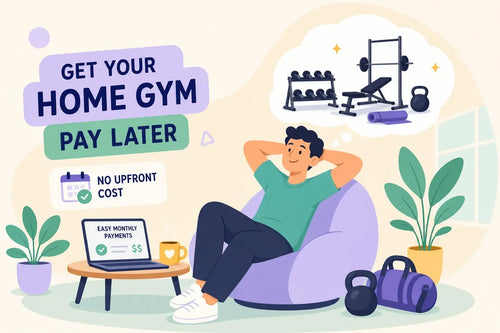
You find the power rack. You find the adjustable dumbbell set. You do the mental arithmetic, stare at the total, and quietly close the tab. It's a familiar sequence, and it stops more people from building a solid home gym than any shortage of motivation ever could. A home gym payment plan can change that by spreading the cost over manageable instalments, making quality gear genuinely accessible without draining your savings in one hit.
Home gym payment plans in Australia are now straightforward, widely available, and genuinely cost-effective if you pick the right one. At Rug and Rig Fitness, we pair curated home gym packages with Buy Now Pay Later directly at checkout, so the gear arrives before the full cost does. But BNPL is just one option, and it's not always the best one. This article walks you through every major option, gives you real fee estimates, and ends with a practical checklist so you can apply with confidence.
What a complete home gym actually costs in Australia
The price range most people underestimate
A starter bundle (adjustable dumbbells, an adjustable bench, and a jump rope) typically sits in the $500 to $800 range at current Australian retail prices. Step up to a mid-range setup with a barbell, weight plates, kettlebells, and a quality adjustable bench, and you're looking at $1,500 to $3,500 depending on the brands and plate weight you choose. A full strength configuration, power rack, Olympic bar, a complete dumbbell range, and an assault bike, comfortably clears $4,000 and can push toward $6,000 or beyond for commercial-grade gear.
The point of those numbers is simple: even a modest, functional setup crosses the $1,500 threshold fairly quickly. That's where payment plans stop being a convenience and start changing the maths in a meaningful way.
Why paying upfront works against you
When the full cost lands in one hit, most people compromise. They buy the cheaper dumbbell set that wobbles at heavier weights, the bench that flexes under load, or the no-name barbell that loses its knurling within a year. That gear frustrates you, breaks down faster, and costs more over five years than buying the right thing once. A home gym payment plan doesn't just spread cost, it opens access to equipment built to last a decade rather than equipment built to look affordable in a product photo.
BNPL for gym equipment in Australia: the main providers
Who accepts gym purchases and what limits they carry
Six providers lead the BNPL market for gym equipment in Australia. Afterpay is accepted at a wide range of fitness retailers, with spending limits starting from $600 and increasing with responsible use. Zip Pay handles purchases up to $1,000, while Zip Money, often offered through merchant-specific promotions, can reach $10,000 or more at selected retailers. Humm handles purchases up to $30,000 on its larger plans, making it relevant for premium setups. Klarna operates with no fixed maximum limit (subject to individual assessment), and PayPal Pay in 4 covers eligible purchases from $30 to $2,000. At Rug and Rig Fitness, we integrate BNPL at checkout so you can confirm your repayment plan before you finalise your order.
Fees that can quietly add up
"Interest-free" and "fee-free" are not the same thing. Zip Pay carries a monthly account fee of $7.95 to $9.95 unless you clear your balance by the due date. Zip Money through some merchants includes a $199 establishment fee alongside the monthly fee. Humm adds establishment and account-keeping fees on larger plans, and providers like Brighte include a $75 establishment fee plus $2.30 per week in account-keeping charges. A BNPL plan that looks clean at checkout can carry $7.95 to $9.95 per month in ongoing fees on longer terms, so read the full fee schedule before you confirm.
Promotional terms worth hunting for
The base product terms from a BNPL provider are often not the best terms available. Merchant-specific promotions regularly beat the standard offering by a considerable margin. Some gym retailers have offered Zip Money with up to 43 months interest-free, which changes the total cost picture entirely for a mid-to-premium purchase. The place to find these deals is the retailer's checkout page, not the BNPL provider's homepage, so check there before you assume you know what terms are available.
How a home gym payment plan affects your total cost
The fee reality across 6, 12, 24 and 48-month plans
Typical Australian plans carry $0 to $99 establishment fees and $6 to $10 per month in account-keeping charges. Across common term lengths, the extra cost above your equipment price works out as follows. A 6-month plan adds roughly $36 to $159 in fees. A 12-month plan adds $72 to $219. A 24-month plan adds $144 to $339. A 48-month plan adds $288 to $579. These are the fees only, not your total repayments. Factor them into your budget before you commit, because a plan that looks attractive at a $9.95 monthly fee can add nearly $600 in extras over a four-year term.
When a personal loan beats BNPL
For purchases above $3,000 to $4,000, or when you need more than 36 months to repay, a personal loan with a fixed interest rate often results in a lower total cost than a BNPL plan with compounding monthly fees. Unsecured personal loan rates in Australia currently start from around 5.76% per annum, with most mainstream offers sitting between 6% and 10% per annum. That's a predictable, fixed monthly repayment with no surprise fees if a direct debit fails. On a $5,000 purchase over three years at 8% per annum, the total interest cost is well under $700, often less than the cumulative account-keeping fees on a long BNPL plan.
Choosing a home gym payment plan for your budget
Budget range: $500 to $1,500
At this level, 0% BNPL is almost always the right call, provided the repayment period keeps you within the interest-free promotional window. Afterpay, Klarna, and PayPal Pay in 4 are the most practical options here. A personal loan rarely makes sense for amounts this small, because interest erodes the benefit of spreading a relatively modest cost. Leasing is not worth considering at this price point for a home setup.
Mid-range: $1,500 to $4,000
This is where the decision gets more nuanced. A 0% BNPL offer through Zip Money or Humm is still the strongest option, but only if you can clear the balance before interest or fees make it uncompetitive. If you need 24 months or more to repay, a low-rate personal loan usually delivers better value than a fee-heavy BNPL plan extended over that window. Gym equipment finance through a lender becomes a genuine option at this tier, and it's worth comparing both before you commit.
Premium: $4,000 and above
At this level, a personal loan or structured equipment finance arrangement typically delivers the best long-run value for buyers keeping their gear for five or more years. Leasing makes more sense only if you expect to upgrade frequently or want to preserve short-term cash flow, but be clear that leasing usually costs more in total than buying, because you are paying for access rather than ownership. BNPL can still work at this price point if the merchant offers a long interest-free promotional term, but repayment discipline matters more at this scale. One missed payment can trigger fees that undermine the whole arrangement.
Eligibility and consumer protections: what to expect in Australia
Basic requirements across BNPL providers
Most BNPL providers in Australia require applicants to be 18 or older, an Australian resident, and able to supply a valid email address, mobile number, and payment card. Afterpay is explicit about these requirements; Zip, Humm, and Klarna follow similar criteria. Higher-value plans, particularly those above $2,000, often require income verification or a bank statement review, which brings the process closer to a standard personal loan application in terms of documentation and turnaround time.
Credit checks and how they affect your file
From June 2025, Afterpay conducts credit checks for new customer applications under Australia's updated BNPL regulatory framework. Afterpay's Pay in 4 uses a soft check that does not affect your credit score; Pay Monthly runs a hard check through Experian. Zip and Humm also run credit assessments for account opening and higher-limit products. Standard BNPL approvals are usually instant; equipment finance applications can take one to several business days depending on the lender and the complexity of your application.
Your rights under the 2025 BNPL reforms
From 10 June 2025, BNPL providers in Australia must hold an Australian credit licence and meet responsible lending obligations. Consumers now have formal hardship rights. Providers must respond to hardship requests within 21 days, and consumers gain access to the Australian Financial Complaints Authority along with the same disclosure protections that apply to regulated consumer credit. This is a meaningful shift. A BNPL plan for gym equipment now comes with the same legal framework as a personal loan, including the ability to lodge a formal complaint if the provider fails to meet its obligations. Most BNPL disputes lodged with AFCA are resolved within 60 days, which is a practical timeframe if something goes wrong.
How to choose and apply: a practical checklist
Before you apply
Start by establishing the full cost of the package you want, not just the headline price. Include delivery, any accessories, and flooring or installation if applicable. Then decide on the maximum monthly repayment you're comfortable with and work backwards to find the right plan length. Check the retailer's checkout page for merchant-specific promotional terms, because extended interest-free periods are often only visible there and not advertised on the provider's own site.
Picking your provider and applying
Match your budget range to the guidance above, then confirm eligibility before applying. For purchases under $1,500, shortlist Afterpay, Klarna, or Humm. For $1,500 to $4,000, look at Zip Money or a personal loan comparison. Above $4,000, compare a structured personal loan against any promotional Zip Money terms your chosen retailer offers. Most approvals through BNPL channels are instant; apply directly through the retailer's checkout or the provider's app. Once approved, keep a written record of the full fee schedule, repayment dates, and the consequences of a missed payment. That document is your reference point if anything goes wrong.
The bottom line on home gym finance
The right home gym payment plan depends on three things: your purchase amount, how long you need to repay, and whether the retailer offers a promotional term that beats the standard product. Match the plan type to your budget range, compare total fees rather than just monthly repayments, and take advantage of merchant-specific deals wherever they exist.
Australian consumer protections now apply to BNPL in a meaningful way, so the risk of being locked into a poor arrangement is lower than it was before June 2025. That makes now a reasonable time to finance a home gym without assuming the worst about the fine print. Reviewing the full fee schedule and repayment schedule before you confirm takes less than five minutes and removes most of the guesswork.
At Rug and Rig Fitness, our curated home gym packages come with BNPL at checkout, same-day dispatch on orders placed before 12pm, and a 30-day money-back guarantee backed by a 2-year warranty. If you're not sure which setup suits your space or your budget, get in touch with our team and we'll help you build a complete, performance-grade home gym without carrying the full cost upfront.